

Residual dry waste
8.484 tonnes — 51.6%
Residual serviceware and mixed packaging reported through the Ti Tree bioenergy pathway.
Case study | Events & sustainability
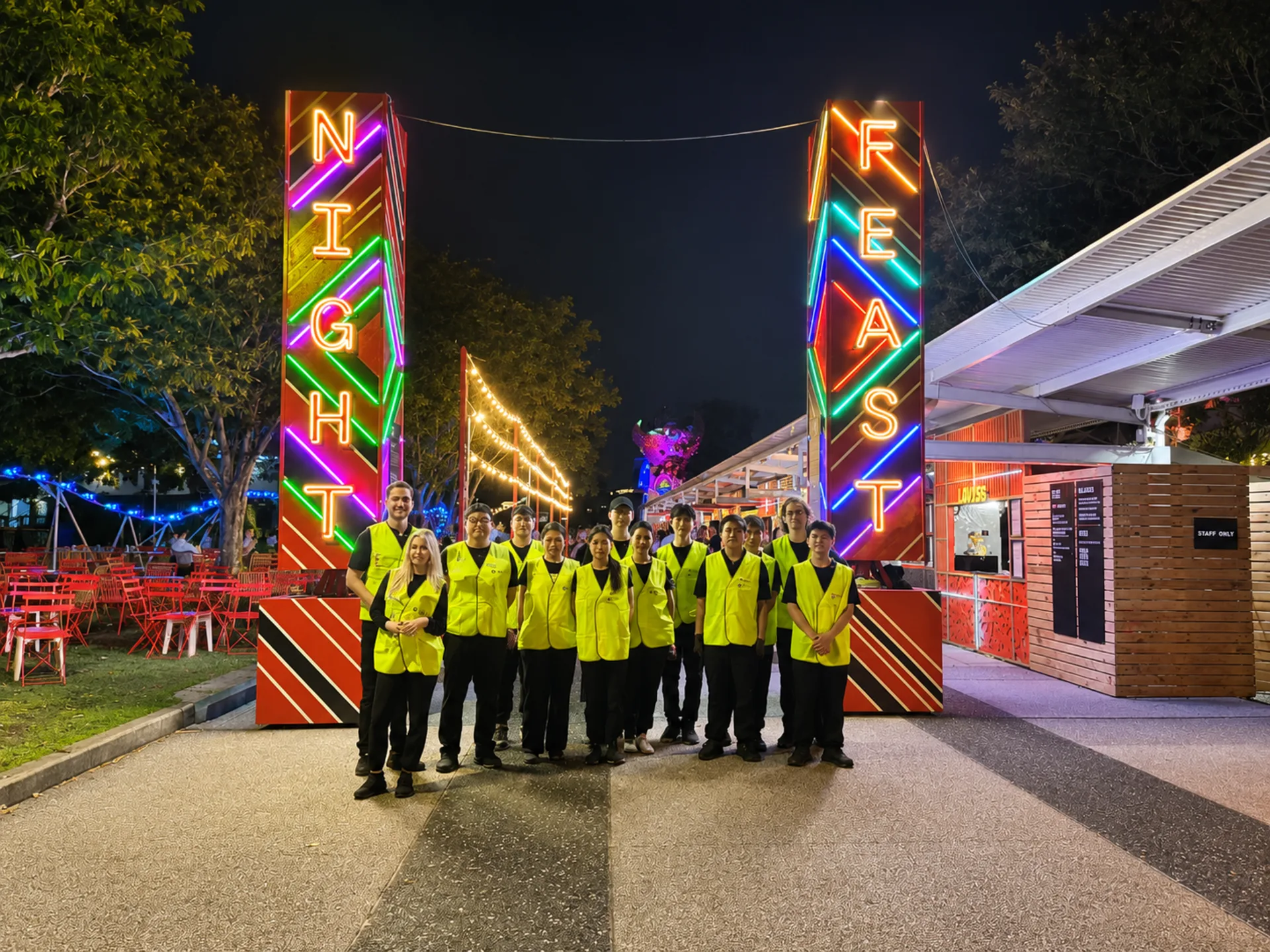
Across the verified Night Feast 2025 reporting scope, New Era helped direct all 16.432 tonnes of waste through documented recovery pathways, including organics composting, paper and cardboard recycling, waste-oil recovery and the Ti Tree bioenergy pathway for residual dry waste.
At a glance
16.432 t
Total waste managed
100%
Landfill diversion achieved
8.484 t
Residual dry waste (bioenergy pathway) — 51.6%
3.648 t
Organics — 22.2%
2.760 t
Paper and cardboard — 16.8%
1.540 t
Waste oil — 9.4%
About Night Feast
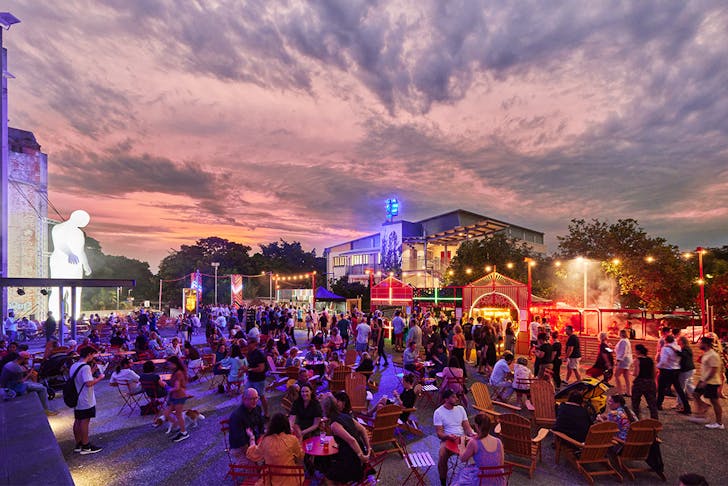
Night Feast transforms the Brisbane Powerhouse precinct into a large-format culinary and cultural event combining leading restaurants, immersive art, live music and high-volume public dining.
Brisbane Powerhouse has publicly described Night Feast as attracting approximately 160,000 people. For its fourth season in 2025, the event ran from 15 October to 9 November and featured 20 dining establishments operating across the precinct.
This scale created significant guest movement, food-service activity, reusable serviceware requirements and complex front- and back-of-house waste demands.
Public event-scale figure reported by Brisbane Powerhouse.
Event environment
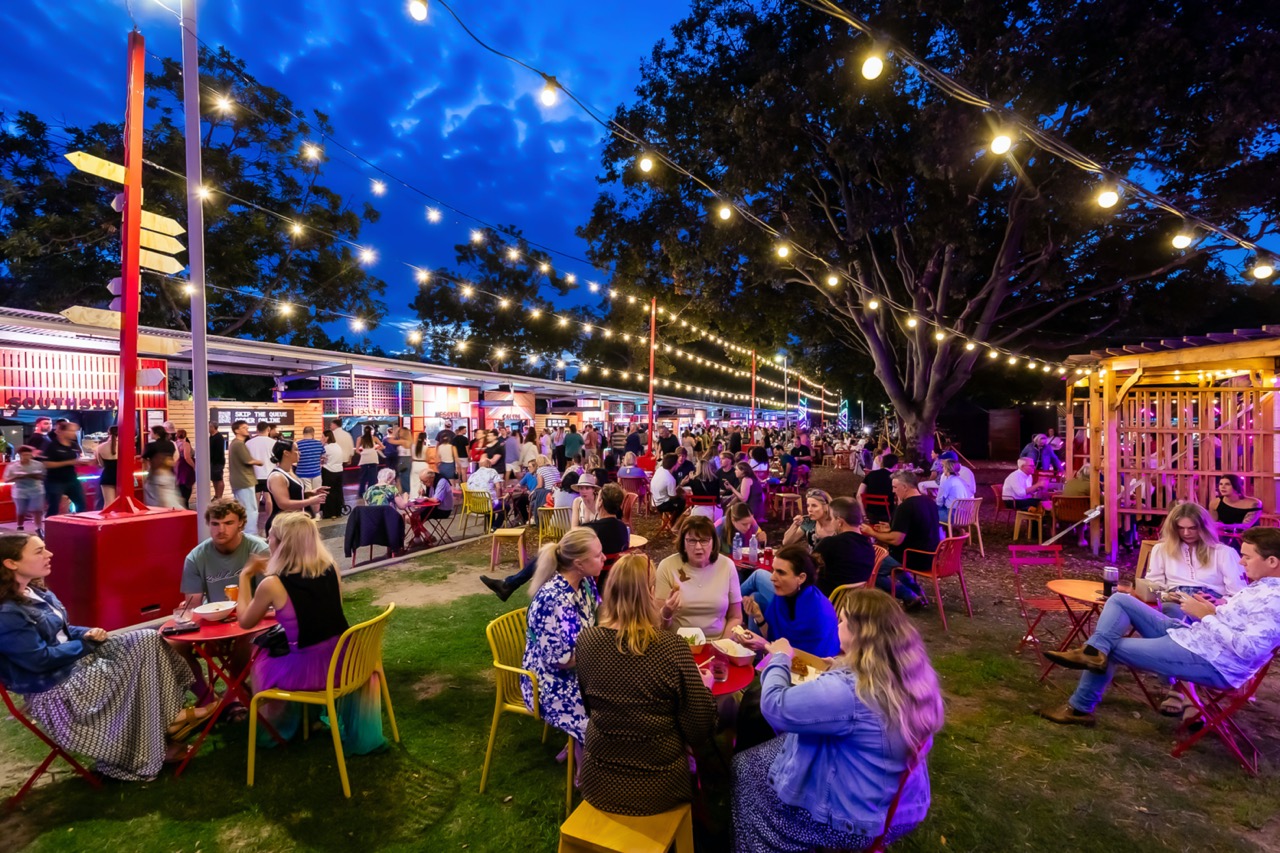
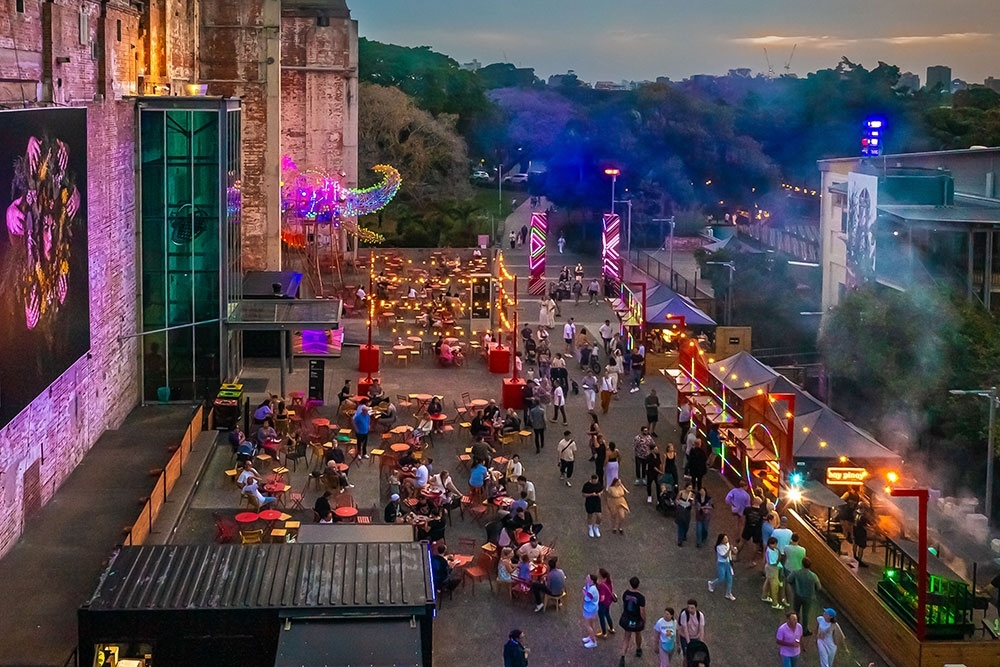
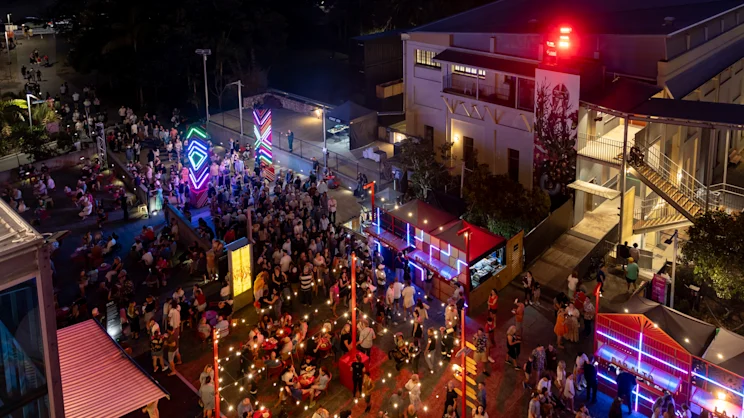
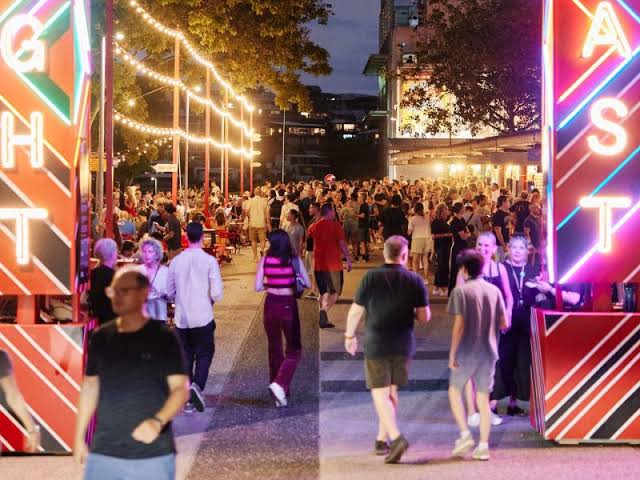
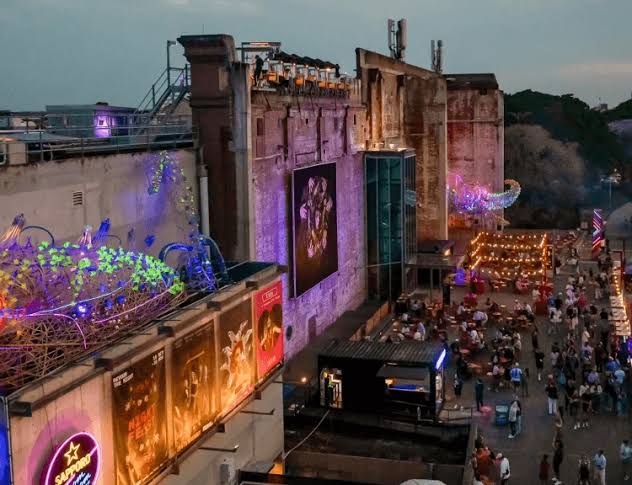
Before looking at the waste results in detail, it is important to understand the scale and complexity of the event environment in which they were achieved. Night Feast is a large-format public food and beverage event with significant guest traffic, multiple activation areas, seating zones and back-of-house operational demands.
The operational challenge
Night Feast combined a high-volume public dining environment with multiple vendors, mixed packaging formats, reusable serviceware, food waste and significant front- and back-of-house activity.
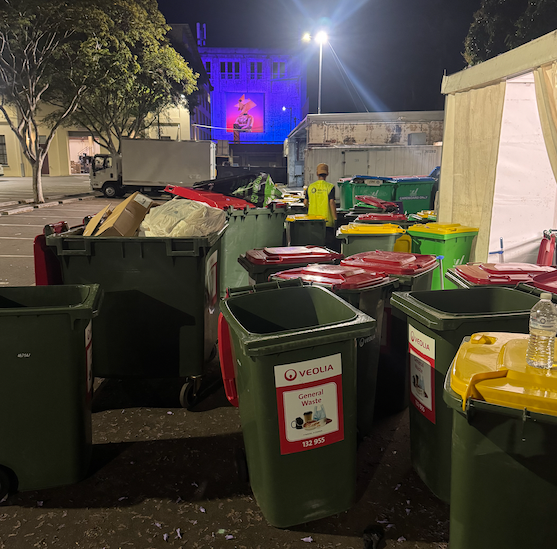
New Era’s role was to make the event’s sustainability plan work in practice. This included establishing clear waste pathways, placing and servicing bins, moving material throughout the site, manually sorting contaminated serviceware, supporting the reusable cup system and coordinating with the relevant recovery partners.
The central challenge was maintaining the quality of each stream throughout busy service periods, when food, liquids, packaging and serviceware regularly arrived mixed together.
How it worked
Five operational pillars carried the result—planned before the event, then maintained throughout each service period.
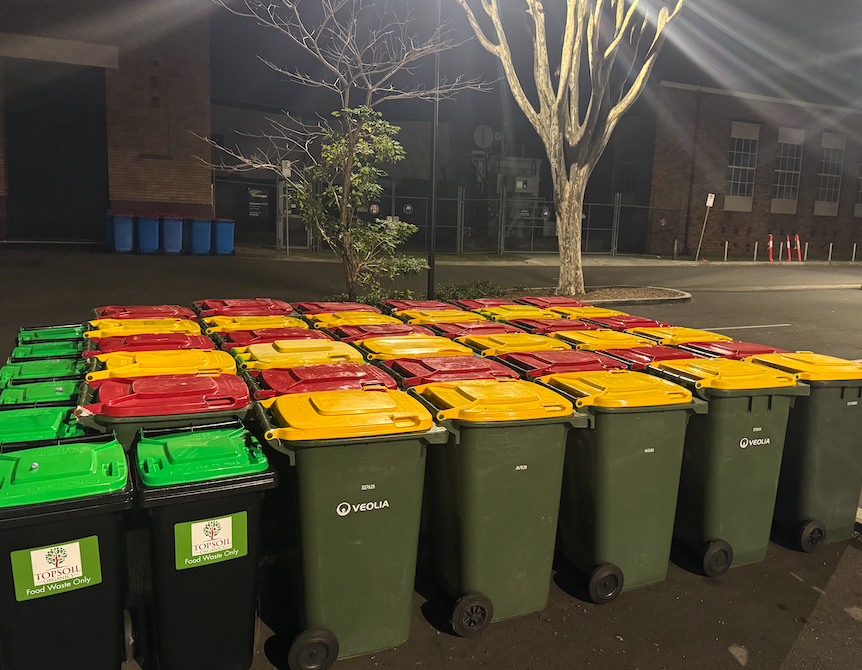
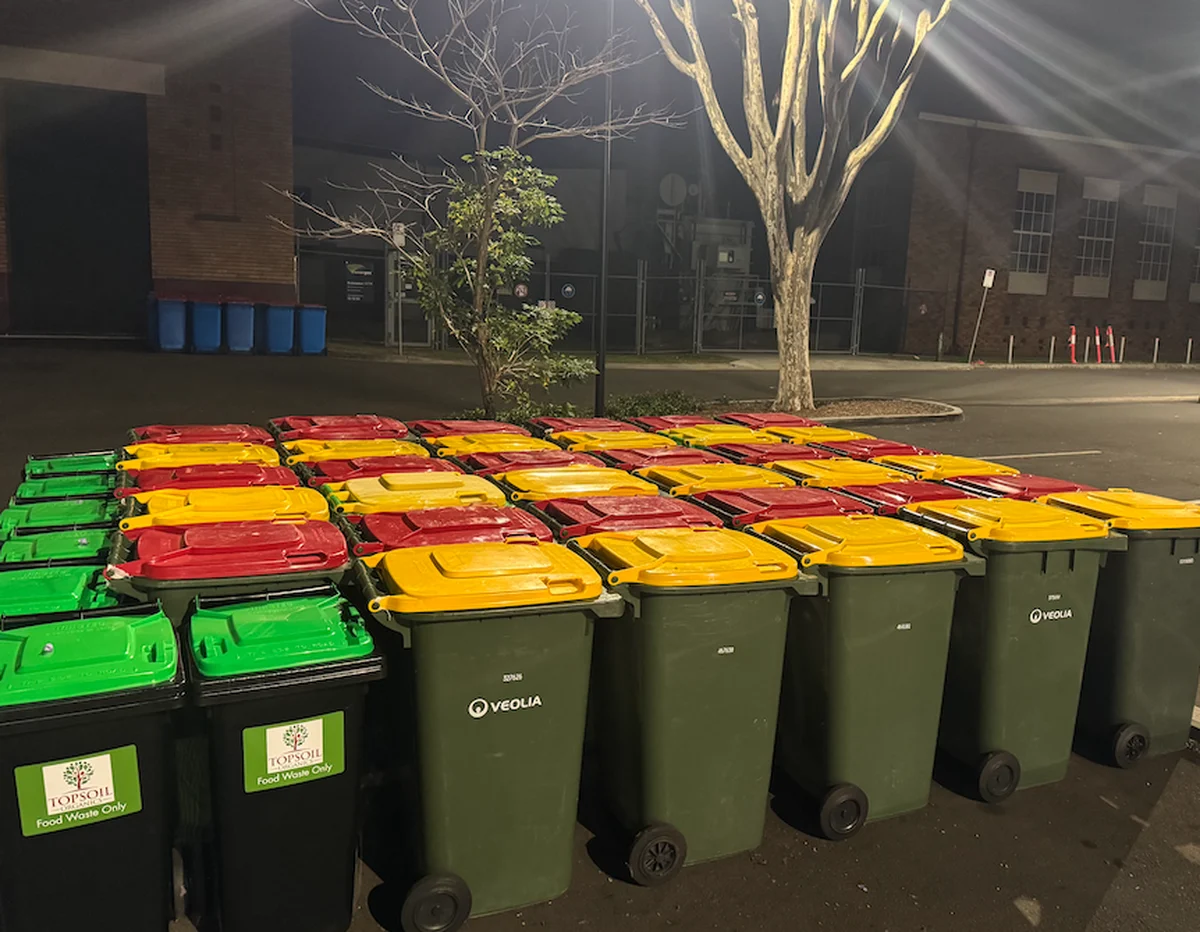
A clear four-stream back-of-house system was introduced to support consistent separation across dry waste, organics, cardboard and container-related streams, reducing confusion and improving material quality.
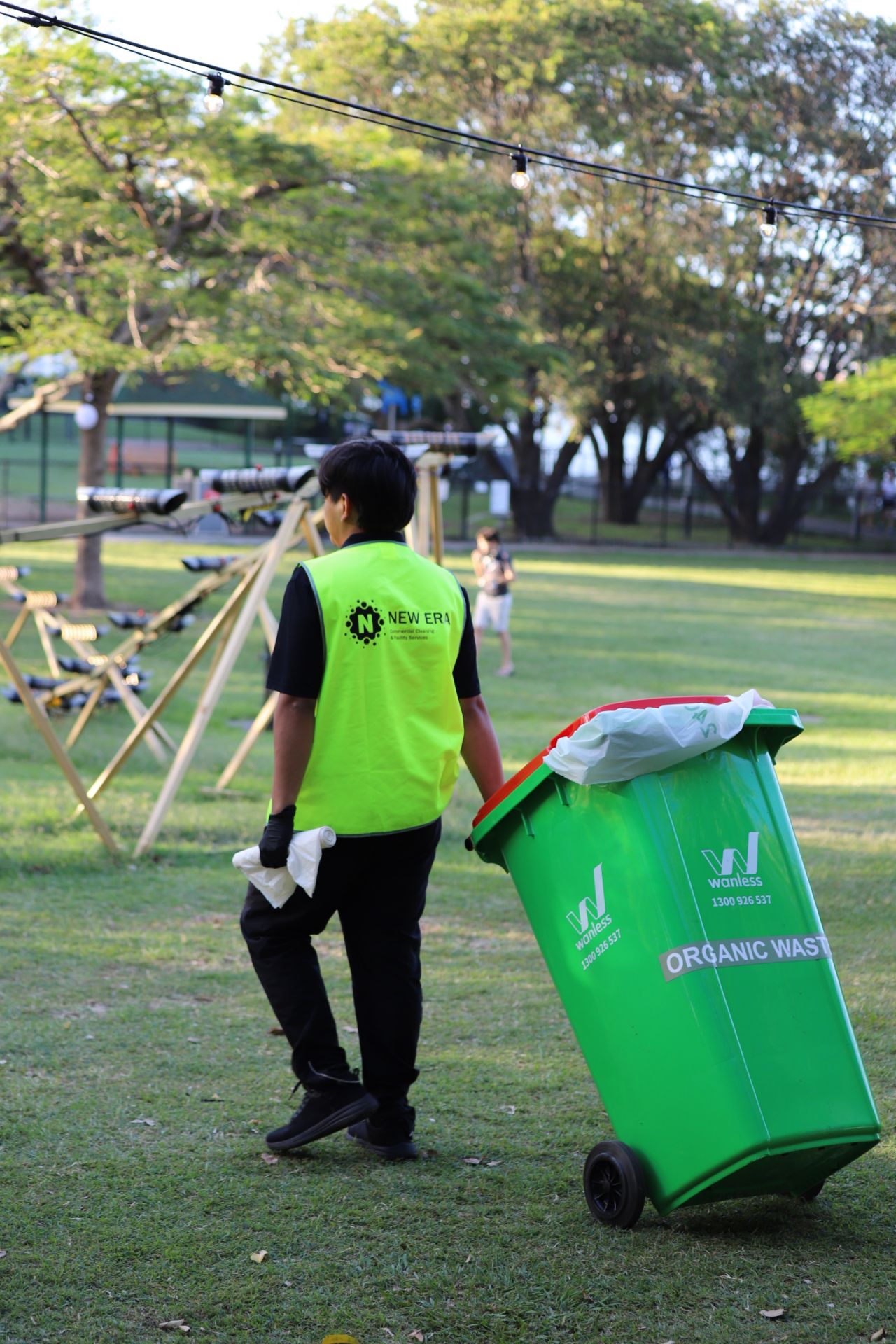
New Era managed bin placement, waste movements, servicing routines and active handling across the event environment, helping keep the site clean, functional and responsive during service periods.
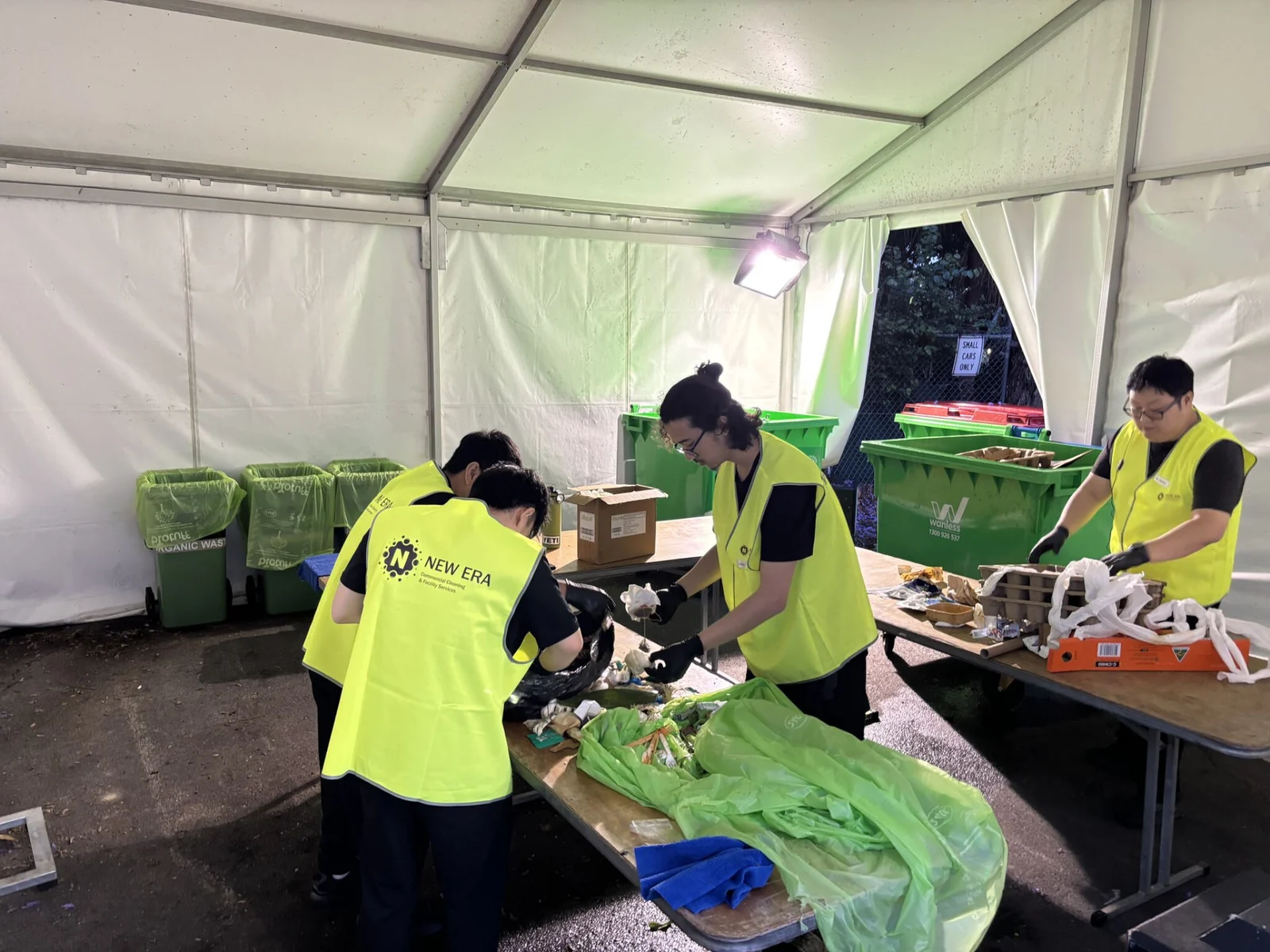
Back-of-house sorting processes were used to strengthen recovery outcomes and reduce contamination risks, particularly within food-related and mixed-material waste streams.
Recovered materials were directed into the most appropriate downstream pathways, including organics processing, cardboard recycling, waste-oil recovery and a dry-waste-to-energy solution.
Waste-provider data was consolidated into a clear project report, giving the event team visibility over what was collected, where each stream went and the outcome achieved.
The result
Across the verified Night Feast reporting scope, 16.432 tonnes of material were weighed and directed through documented recovery pathways.
Waste distribution
8.484 tonnes — 51.6%
Residual serviceware and mixed packaging reported through the Ti Tree bioenergy pathway.
3.648 tonnes — 22.2%
Food and accepted organic material composted through Top Soil Organics.
2.760 tonnes — 16.8%
Recovered and recycled through Remondis.
1.540 tonnes — 9.4%
Cooking oil recovered for recycling.
More than half of the verified material sat within the residual dry-waste stream. Understanding why requires looking at the serviceware used throughout the event and the limitations of the available organics pathway.
Why dry waste was the largest stream
Food-led events generate large volumes of plates, bowls, cutlery, napkins and packaging. Although some of these products were marketed as compostable or made from bamboo, whether they can enter an organics stream depends on the receiving processor, the product certification and the collection system available to the event.
For Night Feast, the available organics pathway was focused on food waste and other accepted organic material. Based on advice provided by the event’s waste consultants and processing partners, the compostable and bamboo serviceware used at the event was not accepted within that organics stream and required a separate residual pathway.
This created one of the most labour-intensive parts of the operation. Used plates, bowls and serviceware regularly arrived with food, sauces and liquids still attached. New Era’s team manually scraped food into the organics stream, emptied liquids and separated the remaining serviceware so the designated dry-waste load remained free from avoidable wet contamination.
This is a major reason why residual dry waste represented 8.484 tonnes, or 51.6% of the verified material managed during the event.
Acceptance of compostable foodware varies between organics processors. Products may require recognised certification, and the receiving facility must be willing and technically able to process them.
51.6% of the total material
The dry-waste category was significant because it included high volumes of serviceware that could not enter the available organics or conventional recycling pathways.
The downstream pathway
After recyclable materials, food organics and waste oil had been separated, the residual dry-waste stream was transported through a pathway linked to the Ti Tree Bioenergy Facility near Ipswich.
Ti Tree is an engineered waste-disposal facility that uses bioreactor technology to accelerate the natural decomposition of residual solid waste and capture the resulting methane-rich biogas for energy generation.
Food scraps, sauces and loose liquids needed to be removed to protect the quality of the designated residual dry-waste collection stream and reduce avoidable contamination.
Engineered bioreactor cell — schematic
A simplified New Era illustration of how residual dry waste is contained, how biogas is captured and how that gas is converted into electricity.
Process explanation informed by publicly available information from Ti Tree Bioenergy.
Process pathway
01
Residual event material separated at Night Feast
02
Food and loose liquids removed from the dry-waste stream
03
Material transported to the Ti Tree Bioenergy Facility
04
Residual waste placed in engineered, lined bioreactor cells
05
Nutrient-rich leachate circulated through the waste
06
Anaerobic decomposition produces methane-rich biogas
07
Biogas captured through extraction pipes
08
Captured gas used in onsite generators
09
Electricity supplied to the grid
10
Filled cells capped, contained, monitored and rehabilitated
Inside the facility, residual solid waste is deposited within engineered and lined cells. Moisture is circulated through the waste to create conditions that accelerate anaerobic decomposition. This process produces methane-rich biogas, which is captured through a gas-extraction system and used as fuel in onsite electricity generators.
The containment, lining, capping, leachate-management and groundwater-monitoring systems are designed to manage the waste and protect the surrounding environment.
Understanding the classification
The Ti Tree pathway combines engineered waste containment with energy recovery. Residual material is placed within lined bioreactor cells, where methane-rich biogas created during decomposition is captured and used to generate electricity.
This is not conventional recycling because the original material is not converted into a new physical product. For the Night Feast project, Wanless / ResourceCo reported this residual stream as energy recovery and included it within the verified landfill-diversion outcome.
This transparent distinction is important: the material followed a documented bioenergy pathway, while the methane produced through decomposition was captured for productive energy use.
For the 8.484-tonne dry-waste stream, waste-provider reporting calculated:
169.68 m³
Methane gas potentially captured
3.22 t
CO₂-e emissions potentially abated
0.48 MWh
Renewable electricity potential
Facility process information is based on Ti Tree Bioenergy’s published operating process. Event tonnage and calculated environmental outcomes are based on Wanless / ResourceCo waste-provider reporting supplied to New Era.
Learn more about the Ti Tree Bioenergy process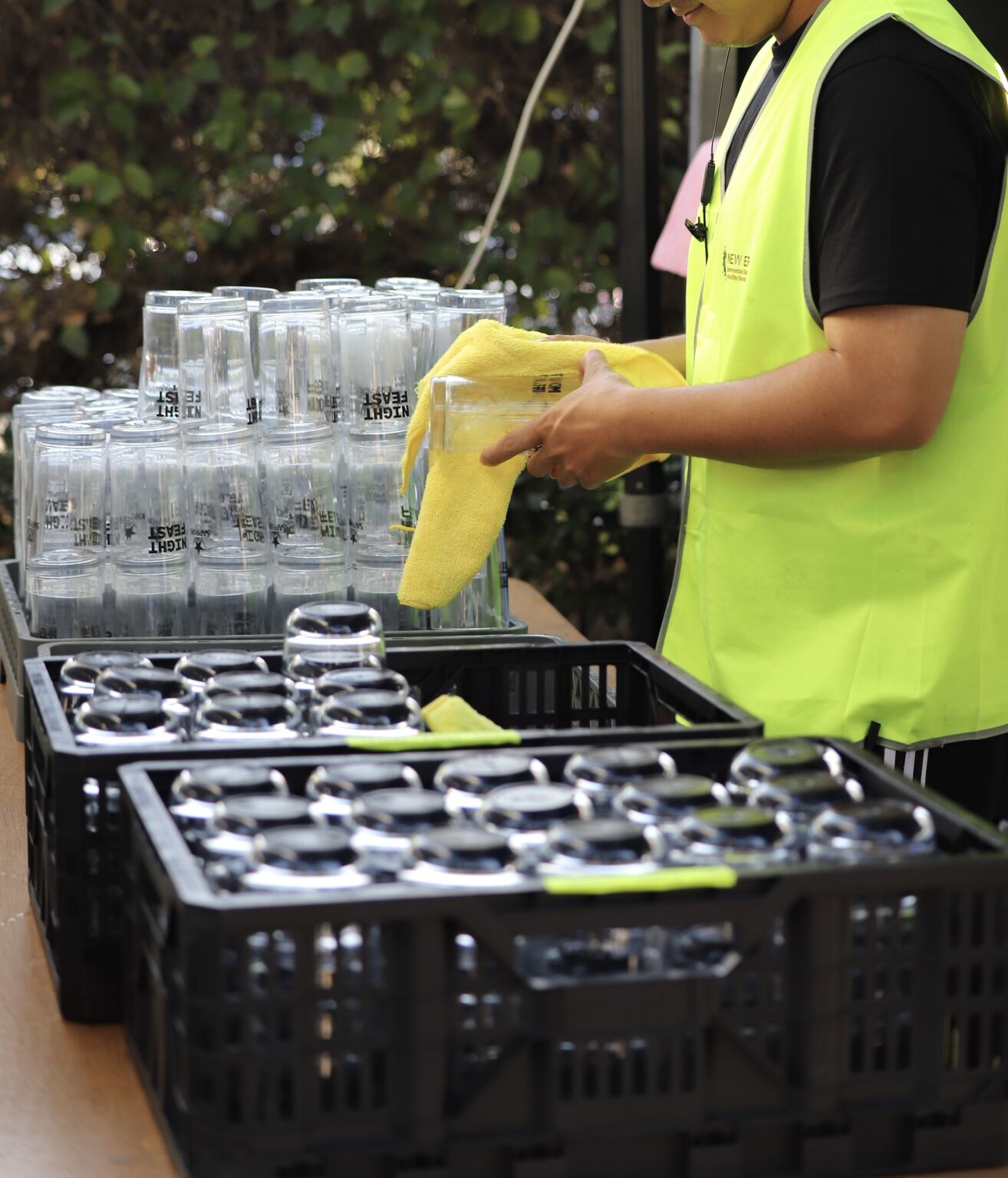
Waste prevention
Recovery was only one part of the event’s sustainability approach. Night Feast also operated a reusable cup system designed to reduce reliance on single-use serviceware.
New Era supported the program through washing, handling and redistribution, helping keep clean cups circulating between vendors and guests throughout the event.
A practical example of supporting waste avoidance at source, not just downstream recovery.
What made the difference
Night Feast demonstrated that landfill diversion is not achieved through bin placement alone. It requires clear stream design, active supervision, hands-on contamination control, suitable processing partners and reporting that accounts for the final destination of every stream.
The system was developed around the specific requirements of Night Feast, but the underlying principles can be adapted to other venues and events based on their format, infrastructure, local processing options and sustainability objectives.